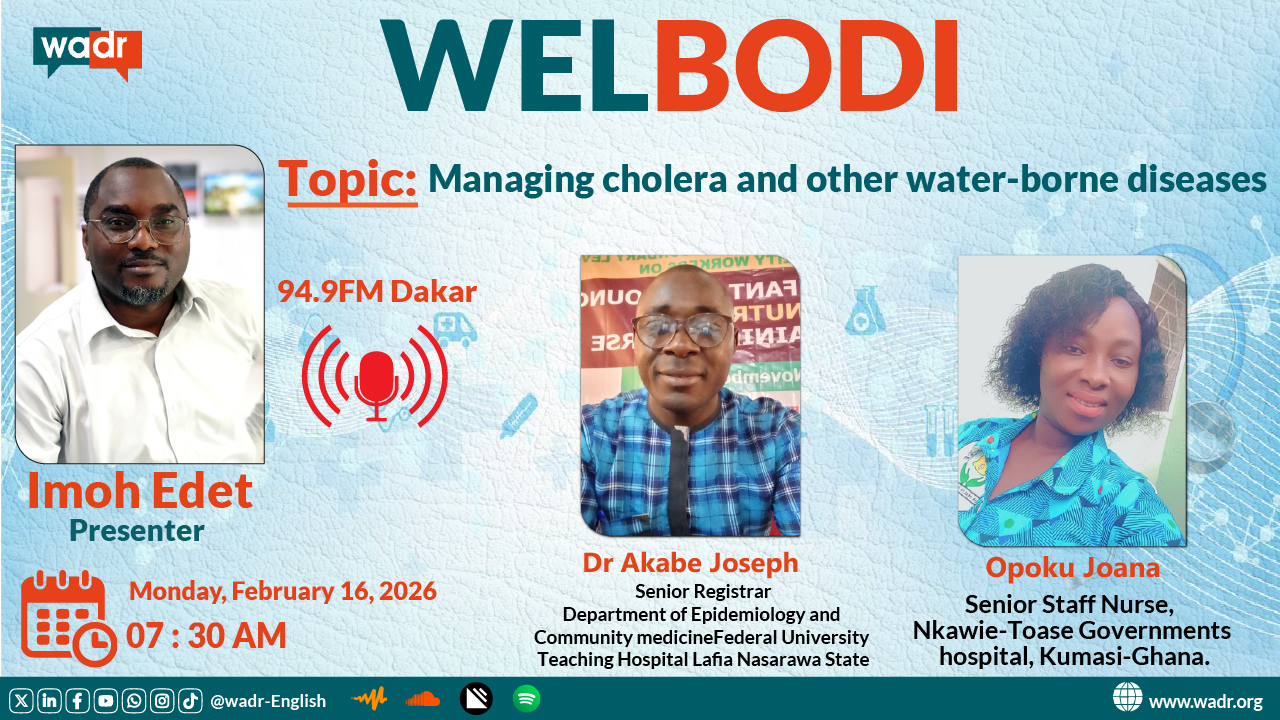
In this edition, we take a closer look at why cholera and other water-borne diseases continue to pose a serious public health challenge across West Africa. Year after year, especially during the rainy season, flooding, poor drainage systems, and limited access to clean water create conditions that allow these preventable diseases to resurface, affecting thousands of families and placing already stretched health systems under pressure.
We explore how factors such as rapid urban growth, inadequate sanitation infrastructure, open defecation, and weak waste management continue to contaminate water sources, turning seasonal rains into a recurring health emergency. Despite decades of awareness campaigns and emergency responses, outbreaks still occur, raising critical questions about whether the region is doing enough to address the root causes rather than reacting after infections spread.
This programme also examines the gaps that remain in prevention, from access to safe drinking water and hygiene education to surveillance systems and early response mechanisms. Why do communities remain vulnerable? What lessons have past outbreaks taught us? And how can those lessons be translated into lasting solutions?
Our guests: Dr Akabe Joseph, Senior Registrar – Department of Epidemiology and Community Medicine, Federal University Teaching Hospital, Lafia, Nasarawa State and Joana Opoku, Senior Staff Nurse, Nkawie-Toase Government’s hospital, Kumasi, Ghana.