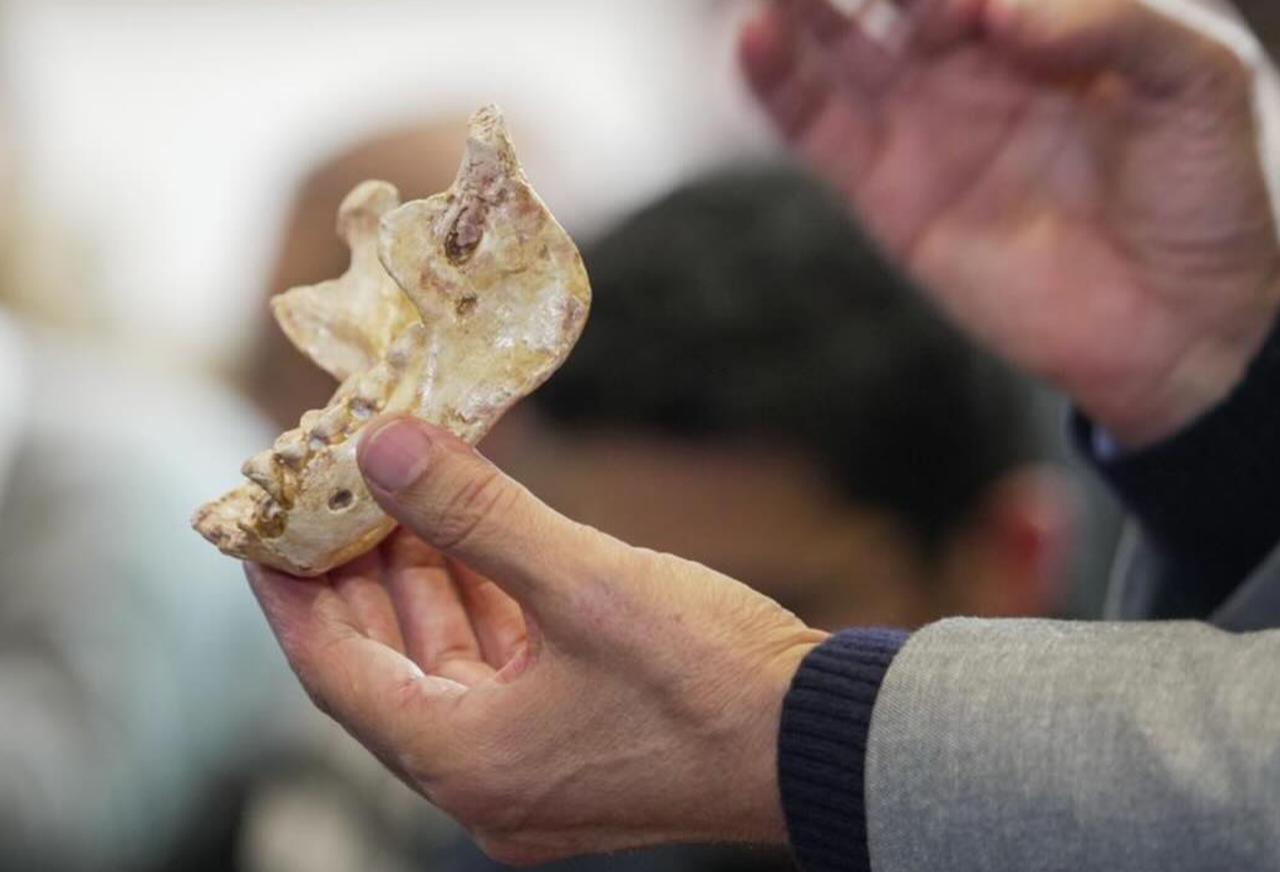
In Morocco, the Ministry of Youth, Culture, and Communication announced the discovery and analysis of new hominin fossils unearthed in a cavity of the Thomas I quarry in Casablanca.
In an official statement issued on Wednesday, the authorities said this work is part of the Franco-Moroccan program “Prehistory of Casablanca,” conducted in collaboration between the National Institute of Archaeological Sciences and Heritage (INSAP) and several international scientific institutions.
The study, published on January 7, 2026, in the journal Nature, is based on the analysis of several human mandibles—belonging to two adults and a child, as well as dental and postcranial remains.
According to the statement, the fossil material presents ” an original combination of archaic characteristics observed in Homo erectus and more derived traits,” reflecting an evolutionary stage that is still poorly documented in Africa.
The sediments in the cave recorded the Matuyama-Brunhes magnetic reversal, dated to 773,000 years ago, providing ” one of the most robust ages ever obtained for a site that has yielded human remains.