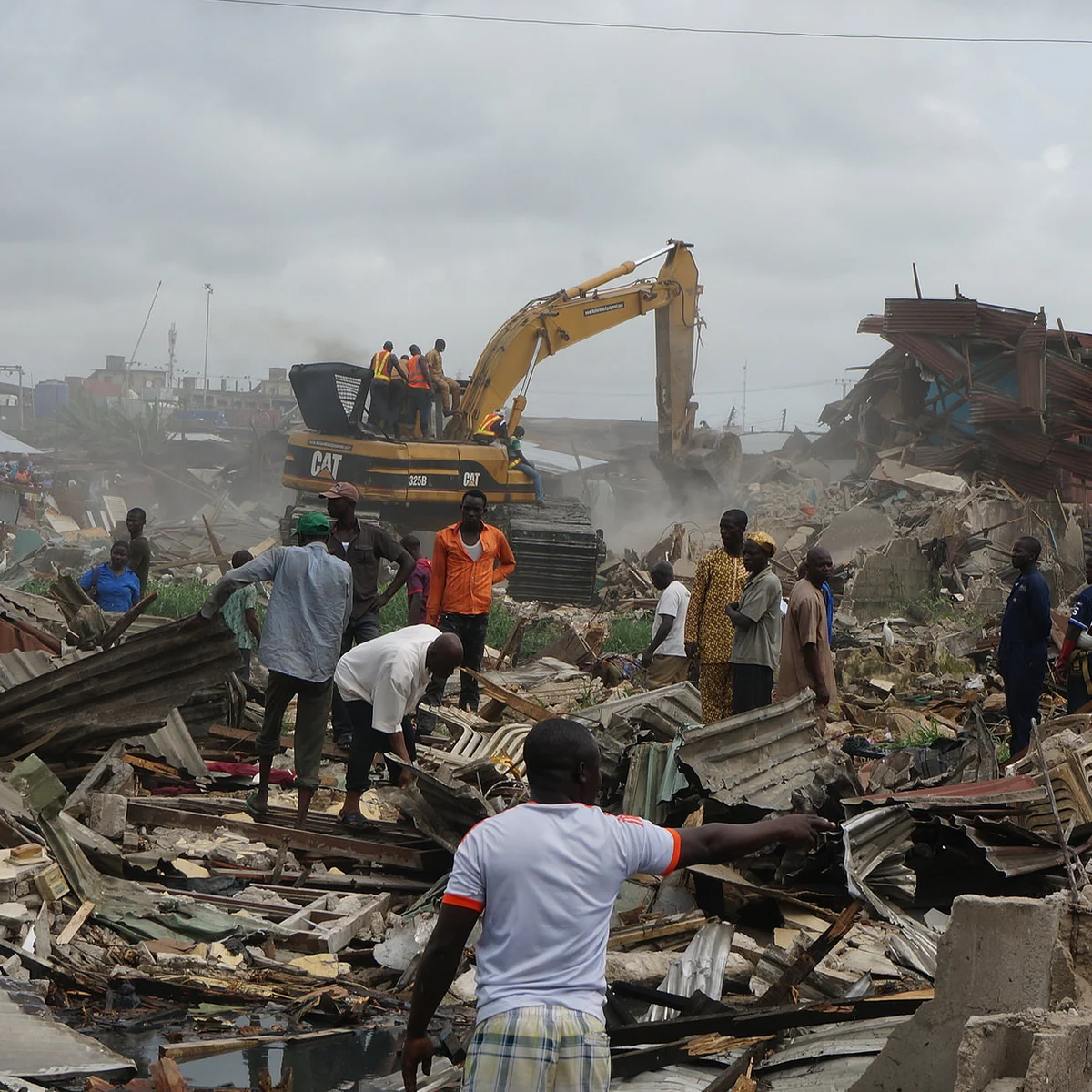
In Nigeria, the demolition of the Makoko waterfront settlement in Lagos has sparked widespread condemnation, with tens of thousands of residents reportedly displaced since evictions began in December. The historic wooden community, often called the “Venice of Lagos,” has been heavily damaged by bulldozers backed by security forces.
Many fishermen and families have been forced to flee, with some now sleeping in their boats on the lagoon. Nearby informal settlements, including Oworonshoki, Owode Onirin, Otumara, and Baba-Ijora, have also been affected, compounding the scale of displacement across the area.
Civil society groups accuse authorities of using excessive force, citing reports of tear gas, arson, and even fatalities during the operations. Rights organisations say the demolitions were carried out without adequate notice or resettlement plans.
The Lagos State government maintains that the actions are not punitive, arguing they are aimed at securing the waterfront and preventing settlements near high-voltage power lines. However, critics insist the evictions go far beyond safety concerns, raising serious questions about human rights and the future use of the land.